
01
Does your app read merchant-owned delivery profiles?
Examples: deliveryProfile, deliveryProfiles, deliveryProfilesCount, location groups, zones, or related merchant shipping configuration.
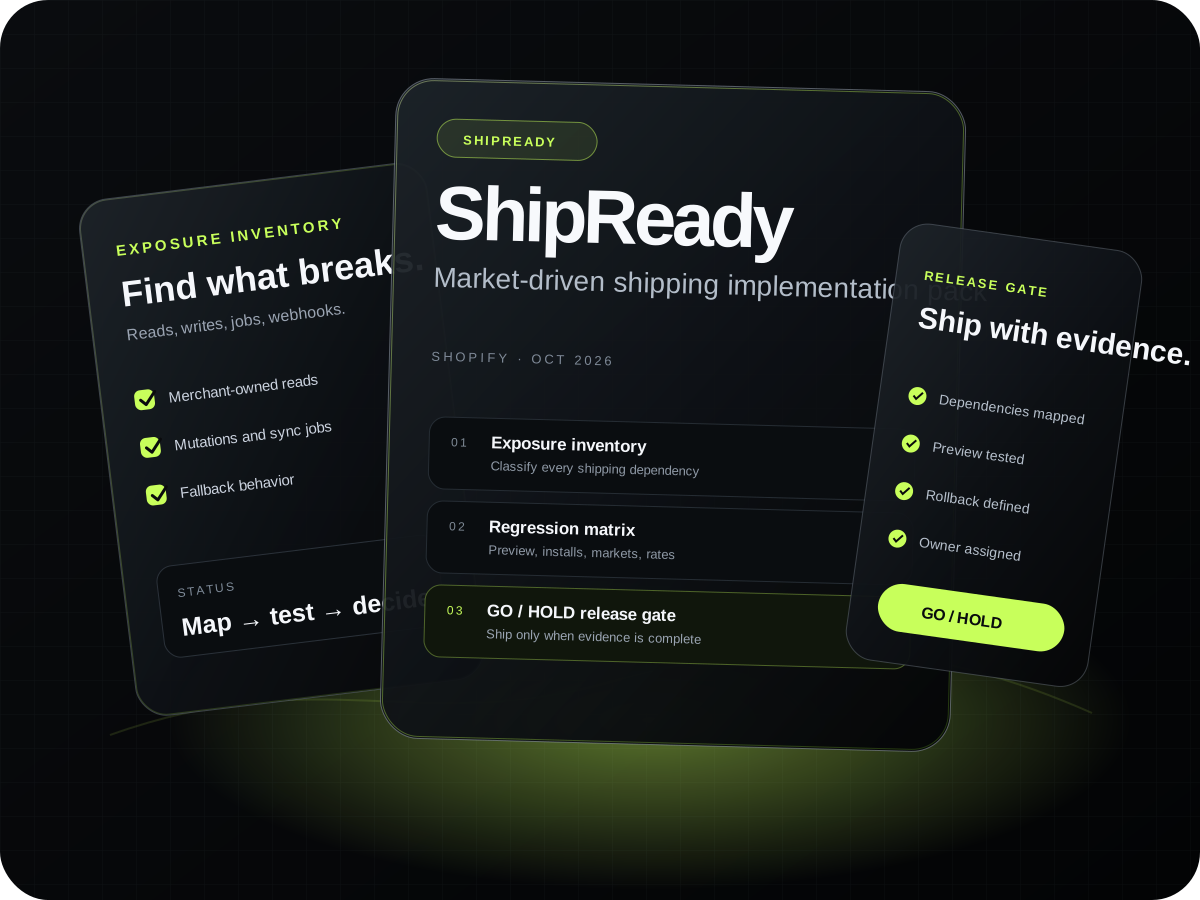
If your app reads or writes merchant-owned delivery profiles, the rollout can invalidate assumptions in shipping, rates, installs, and merchant configuration. ShipReady shows where you are exposed and what has to change before release.
THE EXPENSIVE PART IS MISSING ONE DEPENDENCY.
A missed read path, write mutation, background job, webhook, market assumption, or rate edge case can survive review and fail later under the new model. ShipReady turns that uncertainty into a finite migration checklist.
FREE EXPOSURE CHECK
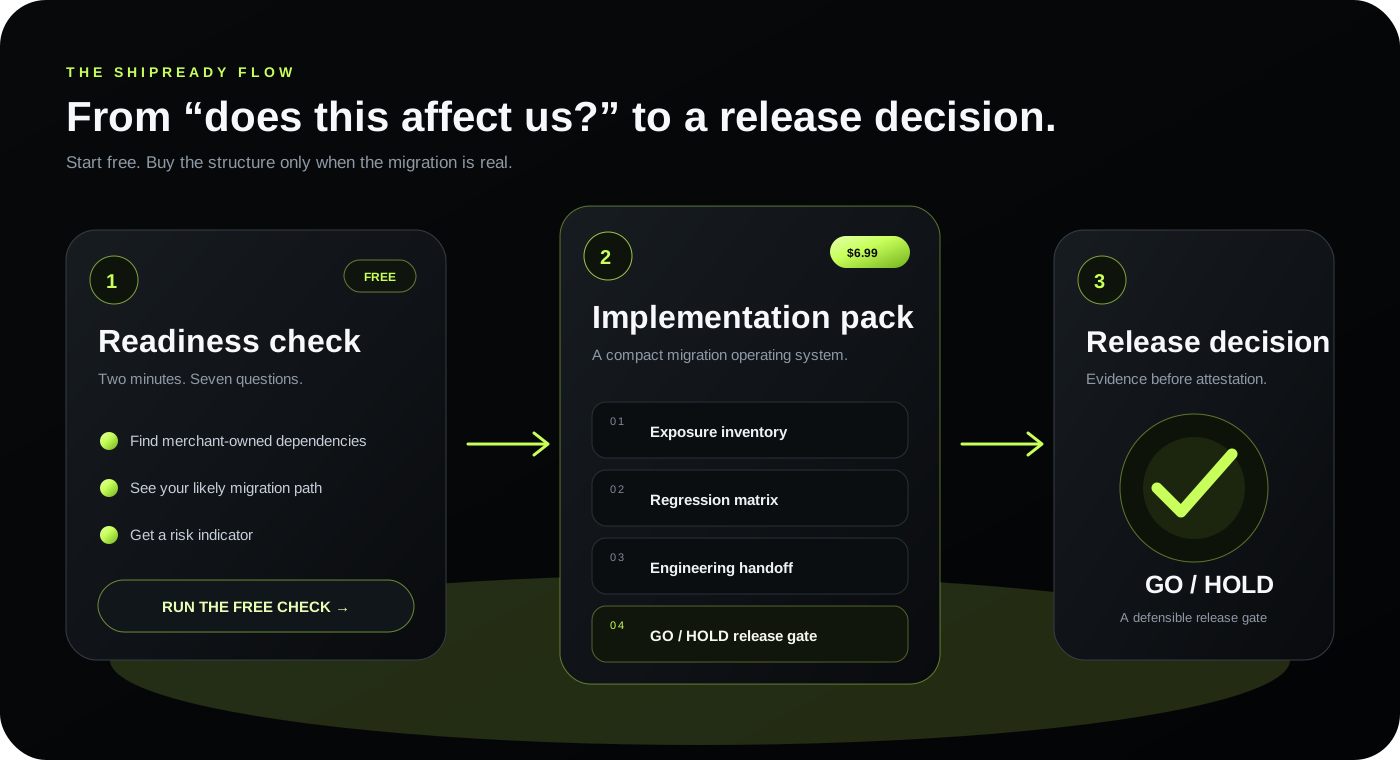
Answer seven questions about how your app touches Shopify shipping. You will get a risk result before you spend engineering time on a migration you may not need.
2-minute migration check
Examples: deliveryProfile, deliveryProfiles, deliveryProfilesCount, location groups, zones, or related merchant shipping configuration.
Examples: deliveryProfileCreate, deliveryProfileUpdate, deliveryProfileRemove, or logic that changes merchant-owned rates and zones.
App-owned delivery profiles remain supported under Shopify’s new model; merchant-owned configuration is the main migration trigger.
This can matter for read-heavy use cases where Shopify points developers toward contextual product and delivery data.
Market-driven shipping makes delivery behavior contextual to market, country, region, product, and location conditions.
Use Shopify’s feature preview on a development store and exercise your actual shipping and fulfillment paths.
Once testing is complete, compatibility confirmation is part of clearing new-install warning friction.
$6.99 IMPLEMENTATION PACK
Use the exposure inventory, regression matrix, engineering handoff, rollback criteria, and release gate to turn “we think we’re compatible” into a documented shipping decision.